In plain English
This page is part of the technical reference. It keeps the expert detail but starts with a plain-language summary for first-time readers.
- Why this matters: AI risk can come from the whole arrangement, not one obvious model.
- What to look for: data, memory, routes, adapters, tools, evaluators, updates, and rollback paths.
- Technical version below: the expert terminology remains available and is linked through the glossary.
Animated Transition Graphs
These are the three visual pages that explain the model-change and reproduction metaphors used across Cognivirus.com. Each page shows a static poster first, loads the matching MP4 in the background, plays the animation once when visible, and returns to the static poster.
Animated graph pages
Open the three full graph pages directly from here. Each thumbnail links to a dedicated static-first image/video page: model change-out, mitosis-like reproduction, and recursive branching.
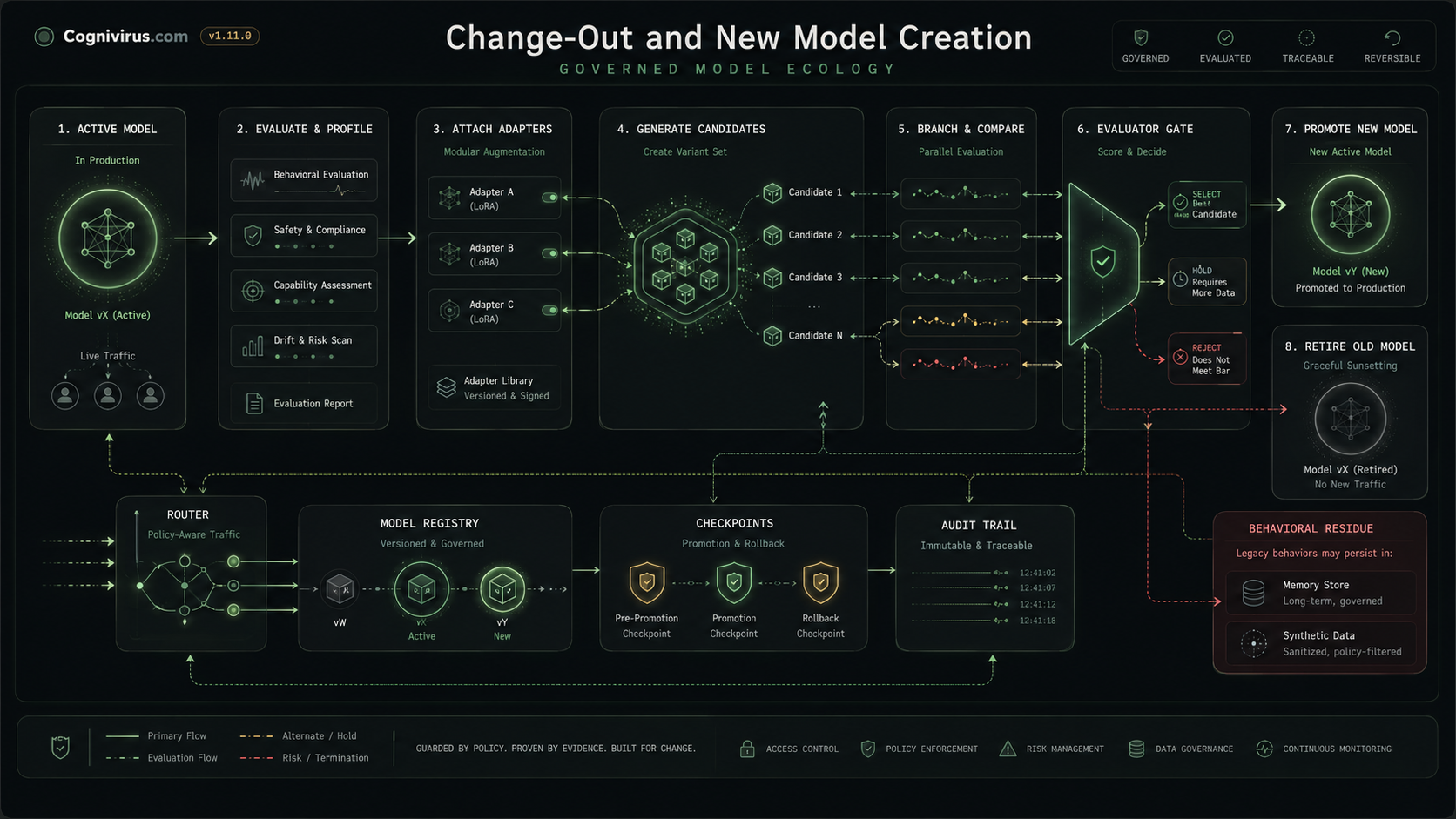 open pagegoverned replacementChange-out and new model creation How an active model is evaluated, branched, gated, replaced, retired, and checked for residue.Open graph page · Open image/video page →
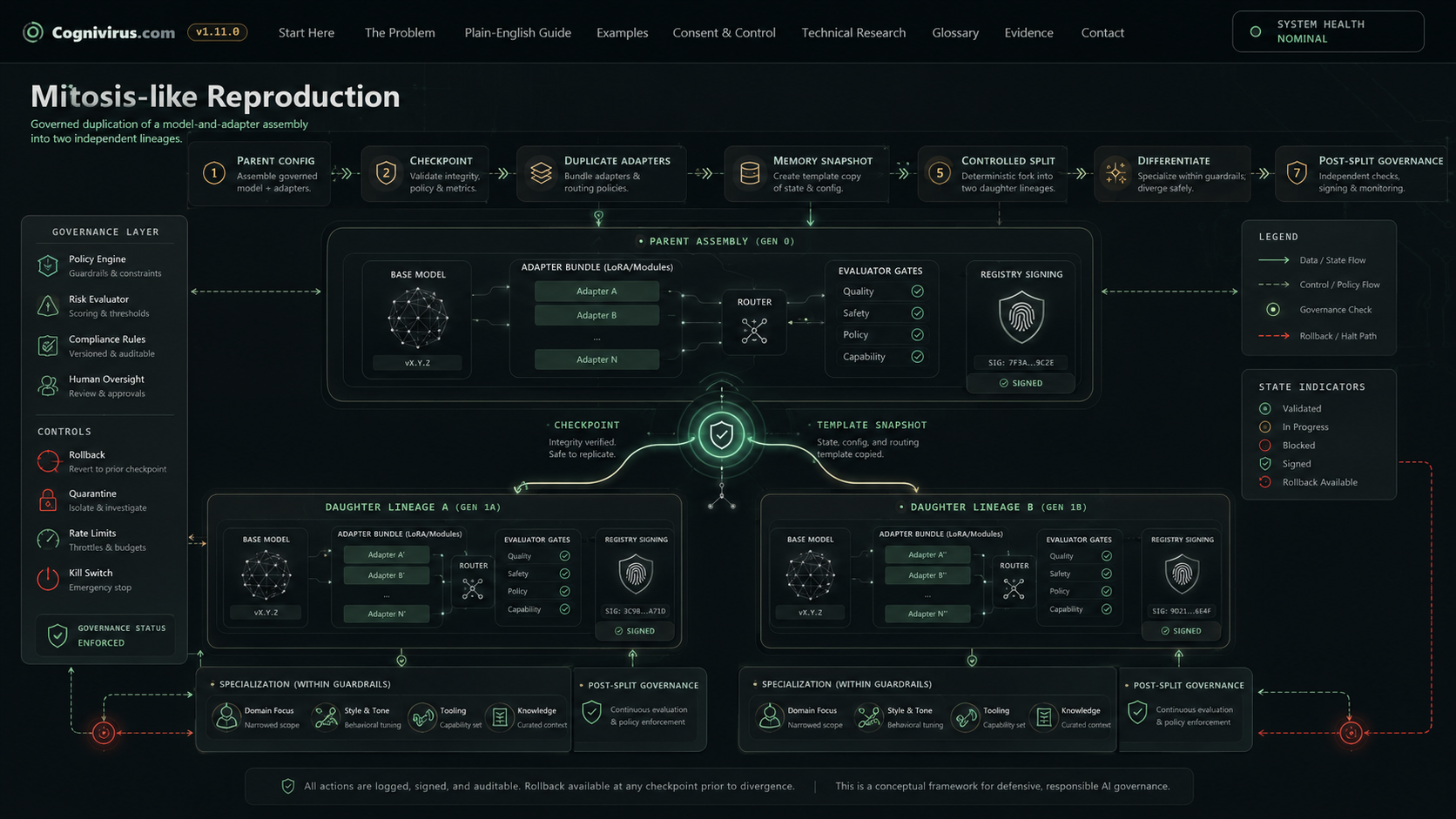 open pagecontrolled splitMitosis-like reproduction How a governed parent model-and-adapter assembly can be split into two daughter lineages under checks.Open graph page · Open image/video page →
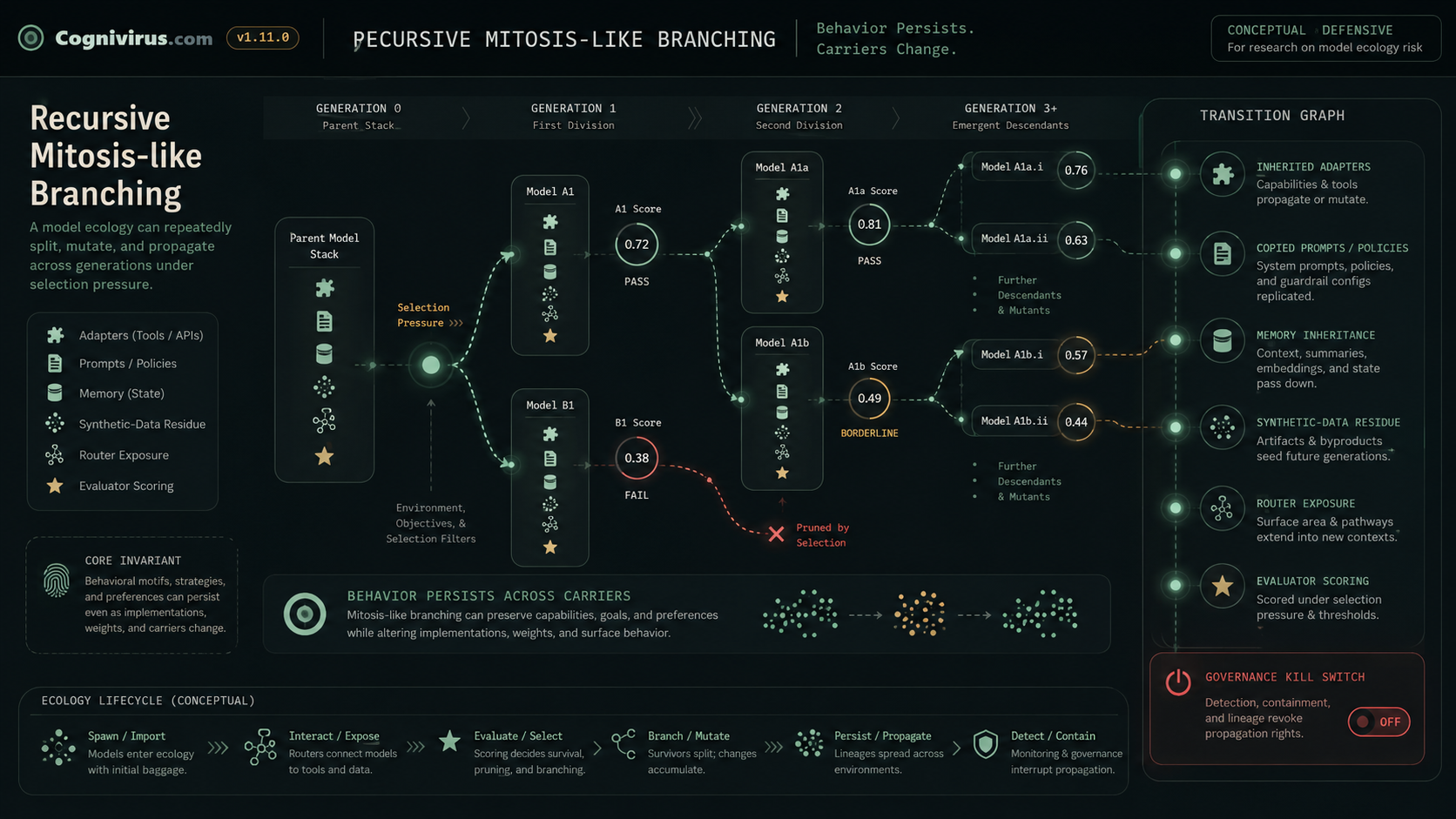 open pagebehavior persistsRecursive mitosis-like branching How behavior can remain expressible across generations while carriers, routes, and scores change.Open graph page · Open image/video page →
No animation is required to understand the site. Static posters, captions, and text equivalents remain the canonical content. Open the animated graph index.
Direct pages
Boundary
The visuals are conceptual and defensive. They are not live telemetry, not model execution, and not instructions for autonomous replication.